How to Start Trading Meme Coins Without Blowing Up Your First Bankroll
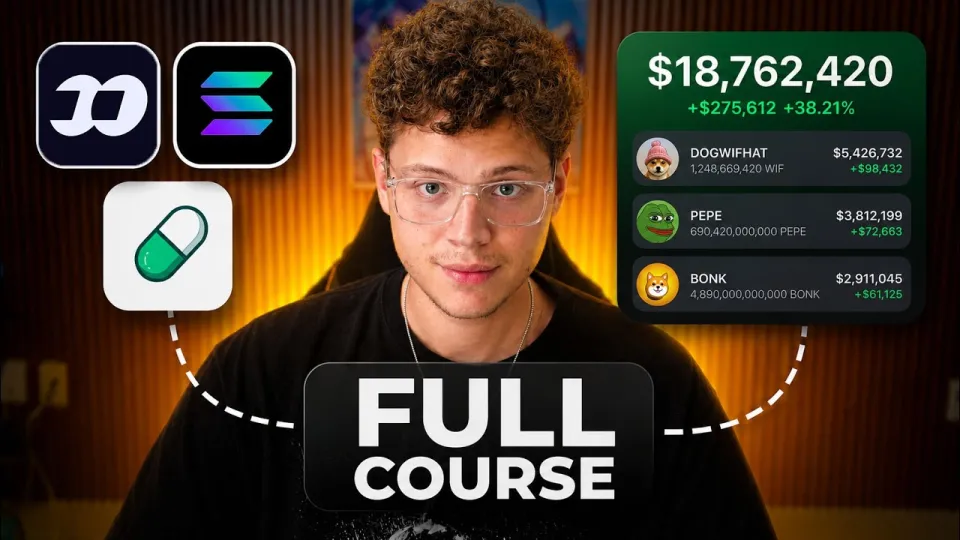
Video: Beginners Guide To Memecoin Trading in 2026 (FREE COURSE)
You can order the same kind of articles for your own video to boost it on YouTube and Google. Just message the Telegram bot @sat_sit_bot. Articles with your video embedded are written and posted by the bot itself — on popular topical sites (no ads). Free trial — 50 articles.
Meme coin trading is the practice of buying tokens whose value comes from community attention and liquidity rather than from cash flow, and the safest way to start is to treat it as a high-risk speculation bucket: define a bankroll you can lose entirely, size every position at 1–2% of it, verify the contract and liquidity before buying, and set exit rules before you enter. The beginner course from Orangie Web3 covers this workflow end to end, and the FOMO trading platform registration link from the video is where the walkthrough starts.
What a meme coin actually is and why the price moves
A meme coin is a token with no product, no revenue and usually no roadmap beyond a joke, a mascot or a community — and that is exactly why its price is driven by flows of attention and liquidity instead of fundamentals. Dogecoin is the oldest large example, but the modern cycle is dominated by tokens launched in minutes on Solana and Base through platforms that let anyone create a market with a few dollars of seed liquidity.
Because there is nothing to value, the only questions that matter are: who is buying, how much can they buy before the price runs away, and who is holding supply that can be sold into them. A token with $40,000 of liquidity cannot absorb a $10,000 sell without collapsing, no matter how good the meme is. That single fact explains most of the losses beginners take.
The pre-trade checklist before you spend a dollar
Before buying any meme coin, run the same five checks in the same order every time, because consistency is what separates a process from gambling.
- Liquidity. Look at the pool size. As a rough rule, a position should be a tiny fraction of liquidity — under 1% is comfortable, over 5% means your own exit will move the price against you.
- Holder concentration. If the top 10 wallets hold more than 30–40% of supply outside of the liquidity pool and known burn addresses, one of them can end the chart whenever they like.
- Contract permissions. Check whether mint authority and freeze authority are revoked. If the deployer can still mint new tokens, the supply you bought is not fixed.
- Age and volume pattern. A token that printed a vertical candle in the first three minutes and has been bleeding volume since is a distribution chart, not an accumulation one.
- Socials and narrative. A live community with real conversation is worth more than follower counts; a Telegram full of price-bot spam is not a community.
If any of the five fails badly, skip the trade. There will be another token in ten minutes — that is the whole point of this market.
Position sizing and the math of staying alive
Position sizing is the only risk control that works every time, because you cannot control the chart but you can control the size of your bet. A practical framework for a beginner:
- Set a total speculation bankroll separate from savings and rent money. If losing all of it would change your life, it is too big.
- Risk 1–2% of that bankroll per token. With a $1,000 bankroll, that is $10–$20 per position.
- Cap the number of open positions at three to five, so you can actually track them.
- Account for fees and slippage: on Solana, network fees are small but priority fees and swap slippage are not, and a 10% slippage setting on a thin pool means you start down 10%.
This is also why the promise of a 100x is misleading in practice: a 100x on a $20 position is $2,000, which is nice but not life-changing, while a 100x on a $2,000 position requires risking your entire bankroll on a token that could go to zero in a minute. The realistic path is many small asymmetric bets, not one heroic one.
Entry, exit and the discipline most traders skip
Discipline means deciding your exit before you enter, because once a position is live your judgment is compromised by hope and greed. A workable template:
- Entry: buy in one or two tranches rather than all at once, so a fast dip does not force you to average down emotionally.
- First target: sell 25–50% at 2x to recover most or all of your initial cost. From that point the trade is free and you can let the rest run.
- Trailing plan: sell another chunk at 5x and let a small remainder ride with a mental stop at breakeven.
- Invalidation: if liquidity drops sharply, the deployer wallet moves tokens, or the community channel goes quiet, exit immediately regardless of price.
Most beginners do the opposite: they take profits too early on a small winner and hold a loser to zero. Writing the plan down before the buy is the cheapest fix available.
Common beginner questions and where people get stuck
Beginners usually get stuck on the same handful of issues, and the questions under the Orangie Web3 course reflect that: people want concrete entry and exit examples rather than vibes, more detail on on-chain mechanics and fees, and a plain explanation of rug pulls.
A rug pull is when the team behind a token drains its liquidity or dumps a hidden supply, leaving holders with a token that has no market. It is not a rare edge case — it is a standard failure mode, which is why liquidity locks, revoked mint authority and holder distribution checks are not optional extras.
The other recurring gap is on-chain literacy. Reading a block explorer, understanding what a wallet label means, and knowing how to check a transaction for a swap versus a transfer is a skill that transfers across every chain. Anyone planning to trade meme coins for more than a month should learn it, because it is the difference between following a call and evaluating one.
Useful links
- FOMO trading platform — registration and bonus link from the video
- Orangie Web3 Discord community
- Orangie on Instagram
Final thoughts
Meme coin trading rewards process over prediction: a defined bankroll, 1–2% position sizes, contract and liquidity checks before every buy, and pre-written exit rules will not make you win every trade, but they keep you solvent long enough to learn. The market is fast and mostly noise, and the tokens with the loudest 1000x promises are usually the ones with the thinnest liquidity. Use the FOMO platform link to practice the workflow with small size, and treat the Orangie Web3 beginner course as your starting map rather than a guarantee. Start small, document every trade, and let the numbers — not the timeline — tell you whether you are improving.
Key takeaways
- Meme coins are priced almost entirely by attention and liquidity, not by revenue or earnings — treat every position as a lottery ticket with a defined cost.
- A workable beginner rule is to risk no more than 1–2% of your trading bankroll on any single meme coin, so five losses in a row still leave you in the game.
- Before buying, check liquidity, holder concentration and whether the contract is renounced or has mint and freeze functions still active.
- Slippage and network fees on Solana or Base can eat a small position: a $50 buy with 10% slippage already starts 10% down.
- Take partial profits on the way up — selling 25–50% at 2x removes the emotional pressure that turns a winner into a loss.
- The Orangie Web3 beginner course and its FOMO trading platform link are starting points for practice, not a guarantee of returns.
Questions & answers
How much money do I need to start trading meme coins?
You can technically start with a few dollars, but the practical minimum is whatever lets you take 20–30 positions of 1–2% of your bankroll without fees dominating. With $100 total, each trade is $1–$2 and network plus slippage costs will eat most of the upside, so most people are better off paper-trading until they have a bankroll of a few hundred dollars.
What is a rug pull and how do I spot one before buying?
A rug pull is when the token's creators remove liquidity or dump a hidden supply, leaving holders unable to sell at a fair price. Warning signs include unlocked liquidity, active mint authority, a small number of wallets holding most of the supply, and a deployer wallet that funded itself minutes before launch.
Do I need to read on-chain data to trade meme coins?
Not for every trade, but basic on-chain literacy — checking liquidity pools, holder distribution, contract permissions and wallet history on a block explorer — is the single most useful skill you can build. It lets you verify a claim instead of trusting a screenshot, and it applies to every chain you trade on.
Why do most beginners lose money on meme coins despite picking winners?
Because sizing and exits matter more than picks. Holding a loser to zero while selling winners too early produces a negative expectancy even with a decent hit rate, and oversized positions on thin liquidity mean the exit itself crashes the price. Fixed 1–2% sizing plus partial profit-taking at 2x fixes most of that.
Source: Beginners Guide To Memecoin Trading in 2026 (FREE COURSE) · Markdown version